Solvent Recovery: Turning Waste into Worth
Have you ever wondered what happens to the huge amount of solvent used in chemical manufacturing and how innovative companies manage this waste responsibly? At Bharat Rasayan Advanced Specialty Chemicals, solvents are not just materials consumed during production; they are valuable resources that can be reclaimed, purified and reused through advanced recovery systems. This approach makes you think: How does a chemical manufacturer turn spent solvents back into high-quality inputs? How do they reduce waste, control emissions and still maintain efficiency? The answers lie in modern solvent recovery technology, a powerful tool that transforms waste into worth.
Overview of Solvent Use in Chemical Manufacturing
Why do chemical plants use so much solvent?
Most people do not realize how important solvents are in the chemical world. They act as reaction mediums, dissolving agents, purification helpers, extractants and cleaning liquids. Without solvents, many chemical reactions simply cannot happen.
But here’s what makes it interesting:
- Pharma companies rely on solvents to crystallize active ingredients.
- Agrochemical manufacturers use solvents for forming stable intermediates and formulations.
- Specialty chemical makers use solvents to achieve purity, clarity and color consistency.
And because these industries operate continuously, massive quantities of solvents are consumed daily. That naturally leads to another question:
What happens to all the used solvents?
In older practices, chemical plants disposed of contaminated solvents as waste. Today that would be expensive, wasteful and environmentally damaging. This is where solvent recovery technology steps in.
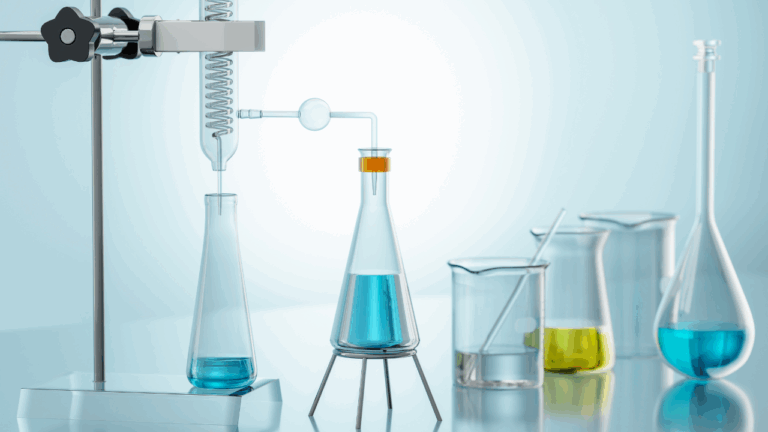
How Bharat Rasayan Integrates Recovery Systems Across Production Lines
How does a company reclaim dirty used solvent and turn it into a pure reusable material?
At Bharat Rasayan, solvent recovery is not a side activity; it is part of the core production strategy. Their approach is built on curiosity and problem-solving: How can we reduce waste? How can we reuse resources without compromising quality?
Here’s how they do it:
Closed-loop recovery design
Every production line is connected to a system that captures solvent vapors, condenses them and channels them for purification.
High-vacuum distillation units
These systems recover solvents at lower temperatures, protecting heat-sensitive compounds and saving energy.
Fractional and azeotropic distillation
Used for separating mixed solvents or breaking azeotropes to achieve high purity. This answers a common question:
Can contaminated or mixed solvents really be reused?
Yes, with the right technology.
Continuous quality testing
Recovered solvents go through GC analysis and purity checks before re-entering production. This ensures the recovered solvent performs just like fresh solvent.
Bharat Rasayan’s model shows that integrating recovery into production is not only possible but also efficient and cost-saving.
Benefits: Lower Emissions, Reduced Raw Material Cost, Energy Efficiency
Many readers wonder: Why invest in solvent recovery systems? What’s the gain?
The benefits are clear and measurable.
Lower Emissions
Solvent vapors contribute to VOC emissions. By recovering solvents instead of releasing or burning them, plants drastically cut air pollution. Closed-loop systems trap vapors before they escape, answering the environmental question:
Can chemical plants really reduce their impact on the air?
Yes, through recovery.
Reduced Raw Material Cost
Buying fresh solvents repeatedly is expensive. Recovered solvent often costs 70–90% less than new solvent. This leads many to think:
Is it financially smart to recycle solvents?
Absolutely. It saves companies lakhs and even crores annually.
Energy Efficiency
Advanced recovery units reuse heat and reduce the need for high-temperature operations. This raises another key question:
Does recovery consume more energy than it saves?
No. Modern systems lower energy demand and improve overall efficiency.
In short, recovering solvents means spending less, polluting less and producing more efficiently.
Real Examples from Pharma and Agrochemical Processes
Readers often want real-world applications. Here are clear examples that answer the question:
Does solvent recovery actually work in real chemical processes?
Pharma Example: Methanol and Ethyl Acetate Recovery
In pharmaceutical synthesis, methanol and ethyl acetate are widely used for reactions and crystal formation. After reactions, they contain water and by-products. Using fractional and azeotropic distillation, Bharat Rasayan recovers these solvents at high purity. The recovered solvent goes straight into the next batch, saving cost and maintaining quality.
Agrochemical Example: Toluene Recovery
Toluene is a key solvent in agrochemical intermediates. Instead of disposing of used toluene, Bharat Rasayan distills it under controlled conditions to purify it. This answers a key industry question:
Can a reused solvent still meet strict process requirements?
Yes, recovered toluene often matches fresh toluene quality.
Pharma Example: Acetone Recovery
Used widely for cleaning equipment, acetone is recovered through vacuum distillation. This eliminates tens of thousands of liters of waste each year.
These examples show that solvent recovery is not just theoretical; it is practical and proven across industries.
Sustainability: Circular Chemistry and Closed-Loop Reuse
A thought many readers have today is:
How can chemical companies move from linear to circular manufacturing?
Solvent recovery is one of the strongest steps toward circular chemistry, a system where materials are reused instead of wasted.
Closed-loop reuse
Recovered solvents are cycled back into production, creating a loop where the same material is used again and again.
Minimized ecological footprint
Less waste, fewer emissions and lower resource consumption all reduce environmental impact and support modern sustainability goals.
Resource optimization
Instead of extracting more raw petrochemical resources, companies maximize the value of what they already have. The natural follow-up question becomes:
Can the chemical industry ever become truly sustainable?
Solvent recovery pushes us closer to that goal.
Conclusion: Curiosity Leads to Better Solutions
When you look deeper into solvent use and recovery, you begin to see that waste is not just something to dispose of; it is a resource waiting to be reclaimed. Companies like Bharat Rasayan show how innovation, curiosity and responsibility can come together to build smarter greener chemical manufacturing systems.
If you’re thinking about how your company can cut cost, reduce emissions or become more sustainable, solvent recovery might be the answer hiding in plain sight