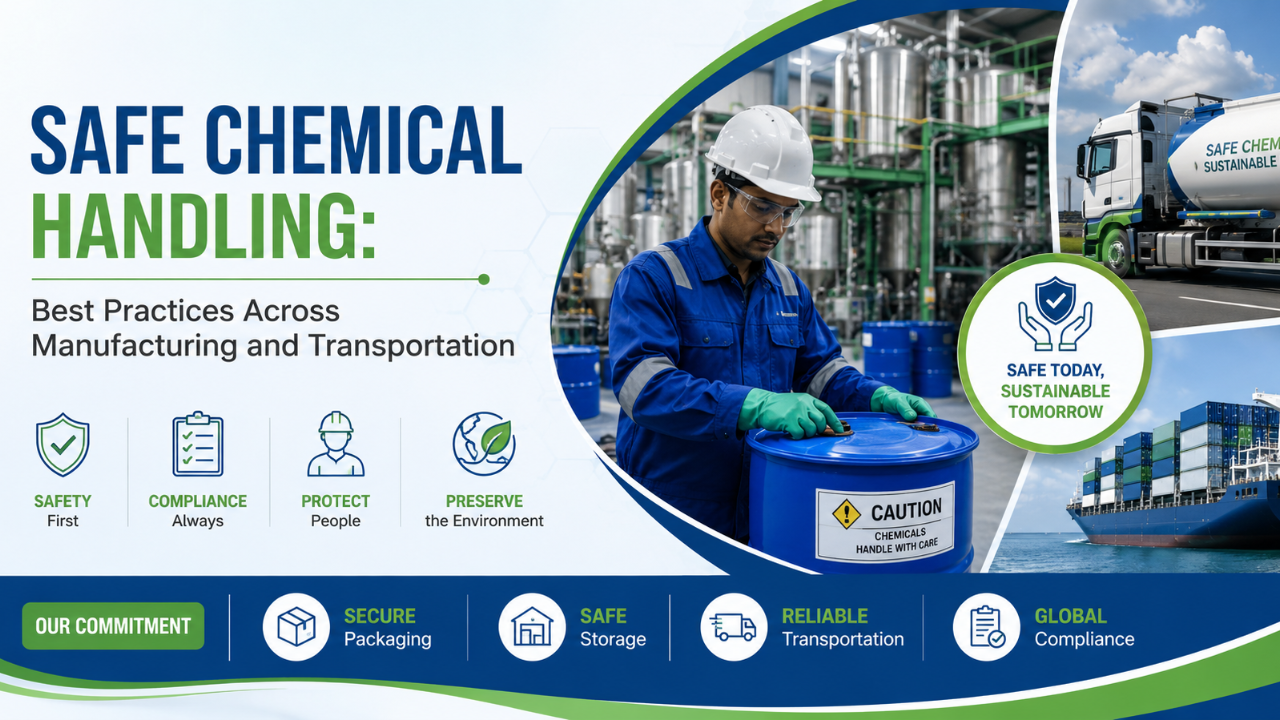
Safe Chemical Handling: Best Practices Across Manufacturing and Transportation
Every day, thousands of tonnes of specialty chemicals travel from manufacturing facilities to pharmaceutical companies, personal care brands, agrochemical manufacturers and industrial plants across the world. By the time these chemicals reach the customer, they have already gone through multiple stages-manufacturing, quality testing, packaging, storage and transportation. At every step, safe handling plays a critical role in protecting product quality, employee safety and the environment. This is why every specialty chemicals supplier, specialty chemicals manufacturer and chemical intermediates manufacturer follows carefully designed handling and transportation practices to ensure products reach customers safely and in the required condition. Safe chemical handling is much more than following regulations. It is about building trust with customers, reducing operational risks and maintaining consistent quality throughout the supply chain.
Why Safe Chemical Handling Matters
Specialty chemicals are often used in industries where quality and precision are essential. Pharmaceutical manufacturers, personal care companies, fragrance producers and industrial manufacturers depend on chemicals that meet exact specifications.
Improper handling at any stage can lead to:
- Product contamination
- Quality deterioration
- Packaging damage
- Safety hazards
- Production delays
- Regulatory concerns
These risks can be reduced through well-planned manufacturing procedures, proper storage, trained employees and reliable transportation systems. For businesses working with chemical intermediates and specialised solvents, safe handling is an essential part of maintaining product integrity.
Safe Handling Begins Inside the Manufacturing Facility
Chemical safety starts long before products leave the manufacturing plant. A responsible speciality chemicals supplier establishes standard operating procedures for every stage of production. These procedures help ensure that chemicals are handled consistently while minimising risks for employees and maintaining product quality.
Key manufacturing safety practices include:
- Clearly defined operating procedures
- Controlled production environments
- Regular equipment inspections
- Process monitoring
- Quality control checks
- Emergency response planning
These measures help maintain safe working conditions while ensuring products meet customer specifications.
The Importance of Proper Packaging
Packaging is one of the most important aspects of chemical safety. The right packaging protects products from contamination, moisture, physical damage and environmental conditions during storage and transportation.
Depending on the product, manufacturers may use:
- High-density polyethylene (HDPE) containers
- Steel drums
- Fibre drums
- Intermediate Bulk Containers (IBCs)
- UN-approved packaging for hazardous materials
Every package should be properly sealed, labelled and tested before dispatch. A reliable specialty chemicals manufacturer selects packaging based on the product’s physical and chemical properties rather than using a one-size-fits-all approach.
Safe Storage Protects Product Quality
Even the highest-quality product can lose its effectiveness if stored incorrectly. Storage conditions should be designed to protect chemicals from factors that may affect their stability, including:
- Heat
- Moisture
- Direct sunlight
- Air exposure
- Cross-contamination
Warehouses should also maintain organised storage systems that separate incompatible chemicals and allow easy product identification. Products such as chemical intermediates, specialty esters and solvents often have specific storage recommendations that help preserve their quality throughout their shelf life.
Employee Safety Comes First
Technology and equipment are important, but trained employees remain the foundation of safe chemical handling. Every individual involved in manufacturing, packaging, storage or transportation should understand the risks associated with the products they handle.
Employee safety programmes generally include:
- Regular safety training
- Personal Protective Equipment (PPE)
- Safe chemical handling procedures
- Spill response training
- Fire safety awareness
- Emergency evacuation drills
A strong safety culture encourages employees to follow established procedures while continuously identifying opportunities for improvement. For every specialty chemicals supplier, investing in employee safety also supports better operational efficiency and product quality.
Transportation Requires Careful Planning
Once products leave the manufacturing facility, responsibility shifts to safe transportation. Chemical transportation involves more than simply moving products from one location to another. Every shipment must be planned carefully to reduce risks during transit.
Good transportation practices include:
- Using suitable transport vehicles
- Secure loading and unloading procedures
- Correct product labelling
- Proper documentation
- Compliance with transportation regulations
- Route planning for sensitive shipments
These measures help ensure products arrive safely while maintaining their original quality.
International Shipping Demands Higher Standards
Many specialty chemical manufacturers in India supply customers across international markets. Export shipments require additional planning because products often travel through multiple transport modes, including road, sea and sometimes air.
International shipping typically requires:
- Export documentation
- Product safety documentation
- Proper hazard classification
- International packaging standards
- Customs compliance
- Shipping labels that meet global regulations
Working with experienced logistics partners helps manufacturers maintain product integrity throughout long-distance transportation. Reliable international shipping is one of the reasons global customers continue to work with established specialty chemical suppliers.
Traceability Improves Safety Throughout the Supply Chain
Modern chemical manufacturing places significant importance on traceability. Every product should be traceable from raw material procurement to final delivery.
Good traceability systems include:
- Batch identification
- Manufacturing records
- Packaging records
- Dispatch information
- Customer delivery records
These systems allow manufacturers to quickly investigate quality concerns, support customer enquiries and improve overall supply chain transparency. Traceability has become an important expectation throughout the specialty chemicals industry, particularly for pharmaceutical and personal care applications.
Safe Handling Builds Customer Confidence
Customers today expect more than quality products. They also expect reliable handling, professional packaging and consistent delivery standards. Whether purchasing chemical intermediates, fragrance ingredients, compounds such as allyl caproate or specialty solvents, customers prefer suppliers that demonstrate strong operational discipline throughout the manufacturing and logistics process.
Safe handling practices help manufacturers:
- Reduce product losses
- Improve delivery reliability
- Protect product quality
- Support regulatory compliance
- Build long-term customer relationships
Over time, these practices strengthen trust between manufacturers and customers.
Safety and Sustainability Go Hand in Hand
Modern manufacturing increasingly connects safety with sustainability. Reducing leaks, preventing spills, improving packaging efficiency and optimising transportation not only improve workplace safety but also reduce environmental impact. Many leading speciality chemical manufacturers continue investing in:
- Safer manufacturing processes
- Improved packaging materials
- Waste reduction initiatives
- Energy-efficient operations
- Responsible transportation practices
These efforts contribute to safer workplaces while supporting long-term environmental goals.
Choosing the Right Chemical Supplier
When evaluating a supplier, businesses should look beyond product specifications.
Questions worth asking include:
- Does the supplier follow safe manufacturing practices?
- Are products packaged according to industry standards?
- How are chemicals stored before dispatch?
- Are employees regularly trained on safety procedures?
- Does the supplier have experience with international shipping?
- Are quality and traceability systems well established?
Choosing an experienced chemical intermediates supplier or solvents supplier with strong safety systems helps businesses reduce operational risks while ensuring reliable product quality.
Conclusion
Safe chemical handling is a continuous process that begins inside the manufacturing facility and continues until products reach the customer. Every stage-manufacturing, packaging, storage, transportation and international shipping-plays an important role in protecting product quality and ensuring workplace safety. As the specialty chemicals industry continues to grow, manufacturers are placing greater emphasis on robust safety practices, employee training, traceability and responsible logistics. For businesses looking for a dependable specialty chemicals supplier, these practices are strong indicators of a manufacturer’s commitment to quality, reliability and long-term customer success. Ultimately, safe handling is not just about meeting regulations. It is about delivering confidence with every shipment.