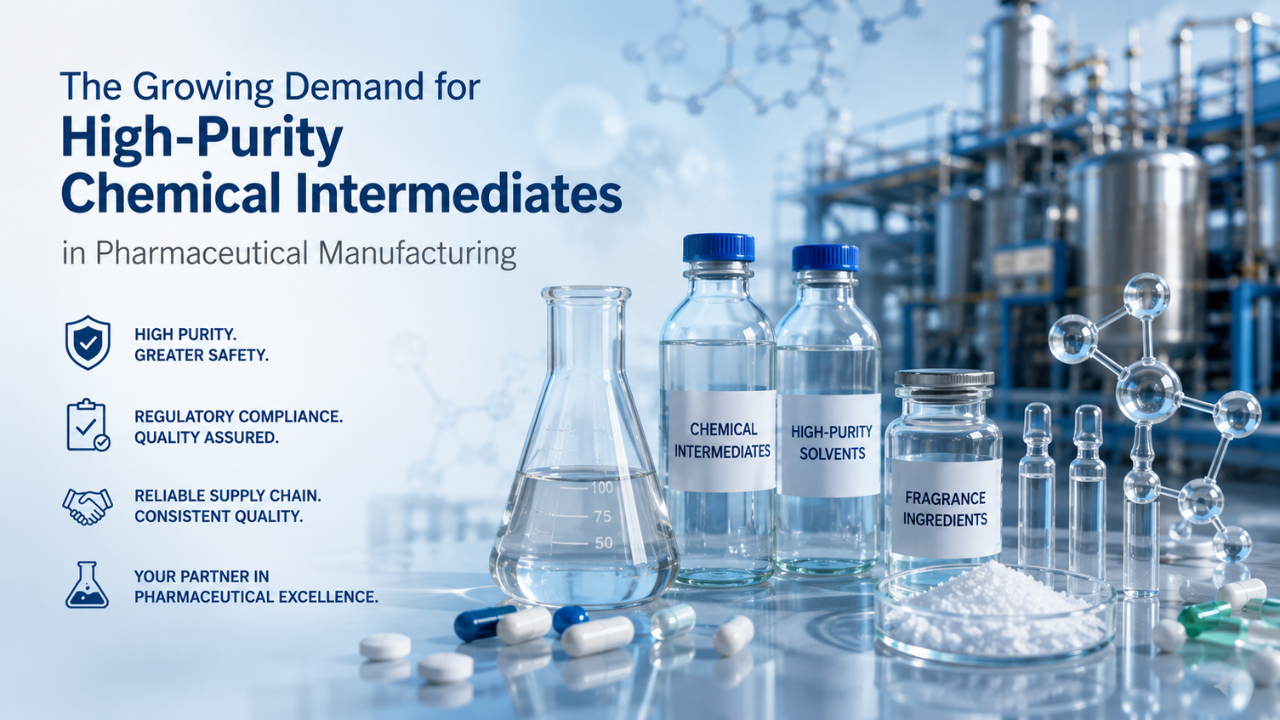
The Growing Demand for High-Purity Chemical Intermediates in Pharmaceutical Manufacturing
Pharmaceutical manufacturing is becoming increasingly complex. As drug developers face stricter regulations, tighter quality standards and growing pressure to accelerate product development, the importance of sourcing reliable chemical intermediates has moved to the forefront.
Today, pharmaceutical companies are re-evaluating their supplier networks and placing greater emphasis on quality, consistency and supply reliability. This shift is driving unprecedented demand for high-purity intermediates and creating new opportunities for every speciality chemicalssupplier, chemical intermediates manufacturer and speciality chemicals manufacturer that can meet these evolving expectations.
For API manufacturers, the conversation is no longer limited to pricing or availability. The focus has shifted toward supplier capabilities, impurity control, regulatory support and long-term manufacturing partnerships.
Why Chemical Intermediates Have Become More Important
Chemical intermediates are the building blocks used during the synthesis of Active Pharmaceutical Ingredients (APIs). Their quality directly influences manufacturing efficiency, product consistency and regulatory compliance.
As pharmaceutical formulations become more sophisticated, manufacturers have less tolerance for variability in raw materials. Even small deviations in purity can affect reaction yields, increase processing costs or create challenges during validation and approval processes.
This is why pharmaceutical companies increasingly seek experienced chemical intermediates suppliers that can consistently deliver materials with well-defined specifications and documented quality standards.
The Shift Toward Higher Purity Standards
A decade ago, many pharmaceutical manufacturers focused primarily on meeting minimum purity specifications. Today, the expectations are considerably higher.
Several factors are driving this change:
Regulatory Scrutiny
Global health authorities continue to place greater emphasis on impurity control, traceability and risk management throughout pharmaceutical supply chains.
Manufacturers must demonstrate that every material entering production is properly characterized and consistently manufactured. This has increased demand for quality-focused speciality chemical suppliers capable of supporting stringent compliance requirements.
Advanced Pharmaceutical Processes
Modern drug development often involves complex synthesis pathways where impurity control becomes critical at every stage. When intermediates contain unwanted contaminants, pharmaceutical companies may face:
- Reduced reaction efficiency
- Additional purification costs
- Lower production yields
- Delays in manufacturing timelines
High-purity intermediates help minimize these risks while improving overall process performance.
Global Market Competition
Pharmaceutical companies are under constant pressure to reduce costs while maintaining product quality. Reliable intermediates contribute to operational efficiency by reducing batch failures, rework and production interruptions.
Purity Is About More Than Specifications
When pharmaceutical companies discuss purity, they are not simply referring to a percentage value on a specification sheet.
They are evaluating:
- Impurity profiles
- Batch consistency
- Residual solvent levels
- Trace contaminant control
- Manufacturing reproducibility
A reliable intermediate manufacturer understands that purity must be supported by robust process controls and analytical verification. This is why advanced testing capabilities have become an essential part of pharmaceutical supply chains.
The Growing Importance of Impurity Management
One of the biggest challenges in pharmaceutical manufacturing is controlling process impurities before they affect downstream production.
Impurities can originate from:
- Raw materials
- Reaction by-products
- Catalysts
- Processing aids
- Storage conditions
- Transportation environments
The earlier these impurities are controlled, the easier it becomes for pharmaceutical manufacturers to maintain product quality and regulatory compliance. Leading speciality chemical manufacturers invest heavily in analytical testing and process optimization to identify and minimize impurity formation before products reach customers.
Why Supplier Reliability Matters as Much as Purity
The pharmaceutical industry has learned an important lesson over the past several years: quality alone is not enough. Supply chain disruptions, logistics challenges and global uncertainties have demonstrated the importance of working with dependable manufacturing partners.
When evaluating suppliers, pharmaceutical companies increasingly consider:
- Manufacturing infrastructure
- Production capacity
- Inventory management
- Technical support
- Regulatory documentation
- Business continuity planning
As a result, many global pharmaceutical organizations are strengthening relationships with established speciality chemical manufacturers in India, where strong manufacturing capabilities and technical expertise continue to attract international customers.
How Speciality Chemical Manufacturers Support API Producers
The relationship between API manufacturers and speciality chemical companies has become increasingly collaborative. Rather than simply supplying raw materials, many manufacturers now provide:
Process Development Support
Suppliers help optimize manufacturing routes and improve production efficiency.
Custom Manufacturing Capabilities
Specialized intermediates often require custom synthesis and tailored production processes.
Analytical Expertise
Advanced testing helps ensure product identity, purity and consistency.
Regulatory Documentation
Comprehensive documentation simplifies qualification and compliance processes for pharmaceutical customers. For API producers, partnering with an experienced speciality chemicals supplier can significantly reduce technical and operational risks.
The Role of Solvents and Process Chemistry
In addition to intermediates, pharmaceutical manufacturing relies heavily on specialized reagents and solvents throughout the synthesis process. A dependable solvents supplier contributes to overall product quality by ensuring:
- Consistent solvent purity
- Controlled moisture levels
- Reliable availability
- Comprehensive quality documentation
Because solvents often influence reaction outcomes, their quality standards are becoming increasingly important within pharmaceutical manufacturing environments.
Innovation Is Driving Demand for Specialized Intermediates
The pharmaceutical industry is investing heavily in new therapies, speciality formulations and advanced drug delivery technologies. These innovations frequently require highly specialized intermediates produced under tightly controlled manufacturing conditions.
As a result, the broader speciality chemicals industry is experiencing increased demand for:
- Custom synthesis solutions
- Complex organic intermediates
- Process development expertise
- Scale-up manufacturing services
Manufacturers with expertise across multiple chemistries are particularly well positioned to support evolving pharmaceutical requirements. Many companies that manufacture pharmaceutical intermediates also produce specialized products for fragrance, personal care and industrial applications, including compounds such as allyl caproate, demonstrating the versatility of modern speciality chemical manufacturing capabilities.
What Pharmaceutical Companies Look for in a Chemical Supplier
When qualifying a new supplier, pharmaceutical manufacturers often evaluate several critical factors:
- Product purity and consistency
- Quality management systems
- Analytical capabilities
- Regulatory support
- Manufacturing expertise
- Supply chain reliability
- Technical documentation
- Scalability for future growth
The ability to consistently meet these requirements often determines whether a supplier becomes a long-term strategic partner.
Conclusion
The growing demand for high-purity chemical intermediates reflects a broader transformation occurring throughout pharmaceutical manufacturing. As regulatory expectations rise and production processes become increasingly sophisticated, pharmaceutical companies are placing greater importance on supplier quality, impurity control, documentation and supply reliability.
For modern pharmaceutical manufacturers, selecting the right speciality chemicals supplier is no longer simply a procurement decision. It is a strategic choice that directly impacts operational efficiency, regulatory compliance and product quality.
As the industry continues to evolve, manufacturers that combine technical expertise, consistent quality systems and dependable supply capabilities will play a critical role in supporting the future of pharmaceutical innovation.