The Growing Demand for Specialty Chemicals in India’s Manufacturing Boom
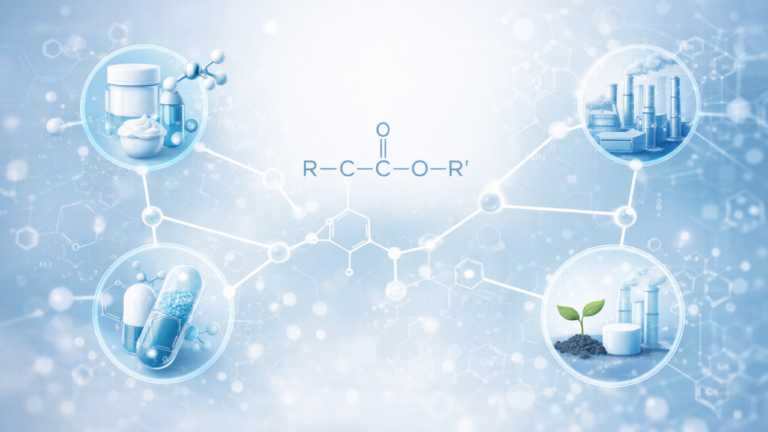
A chemical formula may look the same on paper, whether it is produced in a laboratory or in a large manufacturing plant. But anyone working in the specialty chemicals industry knows that scaling up production is where the real challenge begins. As India strengthens its position as a global manufacturing hub, industries such as pharmaceuticals, electronics, personal care and agrochemicals are creating unprecedented demand for high-quality specialty chemicals. This growing demand has increased the need for every specialty chemicals supplier, specialty chemicals manufacturer and chemical intermediates manufacturer to deliver not just quality products but also consistent large-scale manufacturing capabilities. India’s manufacturing boom is creating exciting opportunities but it is also raising the bar for chemical manufacturers. Producing specialty chemicals at an industrial scale requires deep process knowledge, advanced equipment and strict quality control to ensure every batch meets customer expectations.
India’s Manufacturing Growth Is Fueling Demand for Specialty Chemicals
India has emerged as one of the fastest-growing manufacturing destinations in the world. Government initiatives such as Make in India, rising exports and increasing investments in pharmaceutical and electronics manufacturing have accelerated the demand for specialized raw materials. Unlike commodity chemicals, specialty chemicals are designed to perform specific functions. They are used in industries where precision, consistency and reliability are essential.
Today, specialty chemicals are supporting the growth of:
- Pharmaceutical manufacturing
- Electronics production
- Personal care products
- Agrochemicals
- Flavour and fragrance manufacturing
- Industrial processing
As these industries expand, the demand for experienced specialty chemical suppliers continues to grow.
Why Scaling Up Is More Difficult Than It Looks
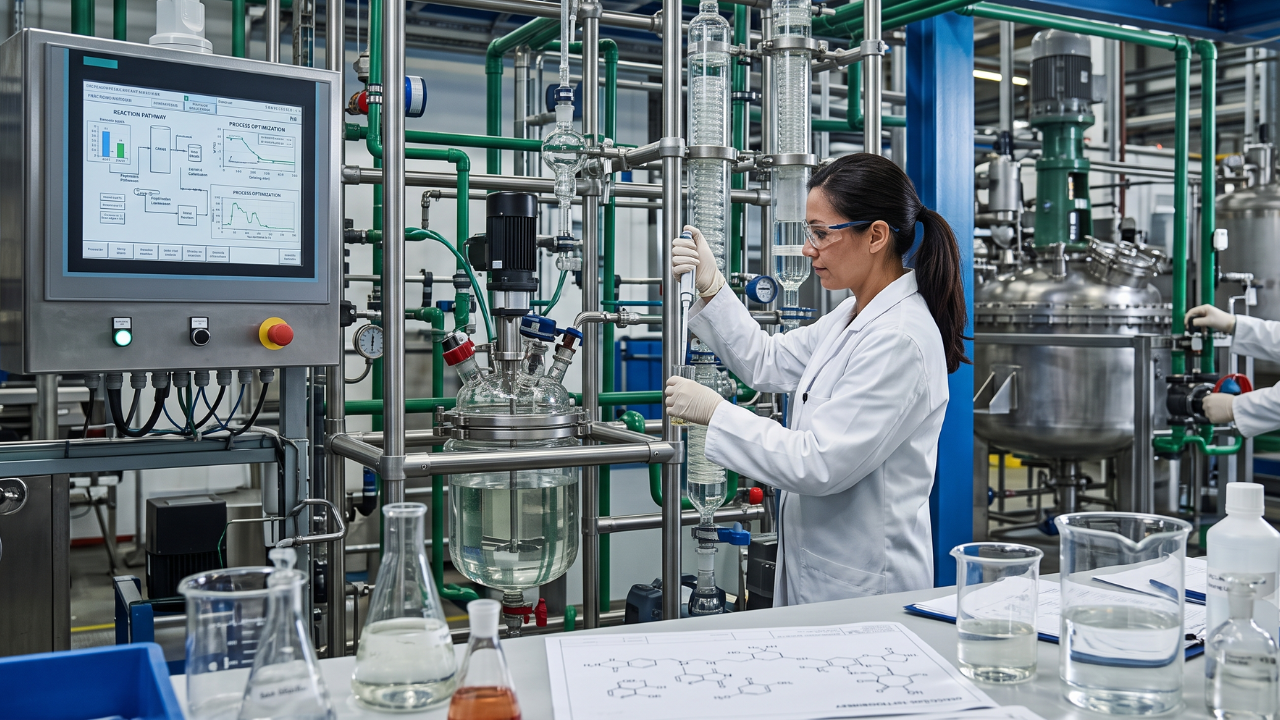
Many successful chemical reactions begin in a laboratory. Small-scale experiments help researchers identify the right reaction conditions and confirm product quality. However, producing the same product in reactors that hold thousands of litres is an entirely different challenge. A process that works perfectly in a laboratory may behave very differently when production is increased.
Manufacturers often face challenges such as:
- Uneven heat distribution
- Longer reaction times
- Mixing inconsistencies
- Higher energy requirements
- Increased impurity formation
- Reduced product yield
Successfully overcoming these challenges requires years of manufacturing experience and process optimization.
Heat Transfer Plays a Bigger Role Than Most People Realise
Temperature control is one of the most important factors in specialty chemical manufacturing. In laboratory equipment, heating and cooling happen quickly because reaction volumes are small. Industrial reactors, however, contain much larger quantities of material, making heat transfer significantly more complex. If temperature is not controlled properly, manufacturers may experience:
- Slower reactions
- Side reactions
- Lower product purity
- Higher production costs
For this reason, every experienced speciality chemicals supplier invests in carefully designed production systems that maintain stable reaction conditions throughout the manufacturing process.
Why Efficient Mixing Matters
Mixing is another challenge that becomes more complex as production scales up. In a laboratory flask, ingredients mix almost instantly. Inside large industrial reactors, achieving uniform mixing requires careful equipment design and process control.
Poor mixing can result in:
- Uneven reactions
- Product inconsistency
- Formation of impurities
- Lower production efficiency
A reliable specialty chemicals manufacturer continuously monitors and optimises mixing conditions to maintain product consistency from batch to batch.
Yield Loss Can Affect Both Quality and Cost
Yield refers to the amount of finished product obtained from a chemical reaction. Even small reductions in yield can have a significant impact when manufacturing at an industrial scale.
Yield losses may occur because of:
- Incomplete reactions
- Process inefficiencies
- Product degradation
- Equipment limitations
- Impurity formation
Improving yield requires detailed process understanding, continuous monitoring and regular optimisation. This is one reason why customers often prefer working with experienced chemical intermediates suppliers that have proven manufacturing expertise.
Specialty Chemicals Require More Than Standard Manufacturing
Every specialty chemical has unique processing requirements. Some require precise temperature control, while others depend on carefully timed additions, specialised solvents or high-vacuum distillation. Products such as chemical intermediates, fragrance ingredients, specialty esters and compounds like allyl caproate demand strict manufacturing controls to ensure consistent quality. Because of this complexity, industrial chemistry differs significantly from laboratory chemistry. Success depends not only on the chemical formulation but also on the ability to repeat the manufacturing process consistently at commercial scale.
Supporting India’s Pharmaceutical and Electronics Industries
India has become one of the world’s leading pharmaceutical manufacturing centres while also expanding rapidly in electronics manufacturing. Both industries require high-performance specialty chemicals that meet demanding quality standards.
For pharmaceutical manufacturers, consistency and purity are essential.For electronics manufacturers, precision and material performance are equally important. As these sectors continue to grow, reliable specialty chemical manufacturers in India are playing an increasingly important role in supporting domestic production as well as global exports.
Why Supply Chain Reliability Matters
Industrial customers expect more than high-quality products. They also need dependable supply partners that can deliver materials on time and at consistent quality. This makes supply chain reliability an important factor when selecting a specialty chemicals supplier.
Customers often evaluate suppliers based on:
- Manufacturing capabilities
- Production consistency
- Quality systems
- Technical expertise
- Delivery performance
- Ability to scale production
Manufacturers that consistently meet these expectations build stronger long-term customer relationships.
Innovation Is Driving the Next Phase of Growth
The future of India’s manufacturing sector will depend on continuous innovation. New pharmaceutical formulations, advanced electronics, sustainable materials and specialised industrial applications are creating demand for increasingly sophisticated specialty chemicals. To meet these requirements, manufacturers are investing in:
- Process optimisation
- Advanced manufacturing technologies
- Improved quality systems
- Scale-up expertise
- Research and development
These investments are helping the Indian specialty chemicals industry become more competitive in global markets.
Conclusion
India’s manufacturing boom is creating exciting opportunities for the specialty chemicals sector. However, meeting this growing demand requires far more than simply increasing production volumes. Industrial manufacturing involves overcoming complex challenges related to heat transfer, mixing, process optimisation, yield improvement and quality control. These factors distinguish commercial-scale manufacturing from laboratory research and determine whether a process can be successfully scaled for global markets. As demand continues to grow across pharmaceuticals, electronics and other advanced industries, experienced specialty chemicals manufacturers with strong technical expertise, reliable manufacturing capabilities and a commitment to consistent quality will remain valuable partners in India’s manufacturing journey.